One Day Online OH&S Leadership Training (8 Hours)
About this Course
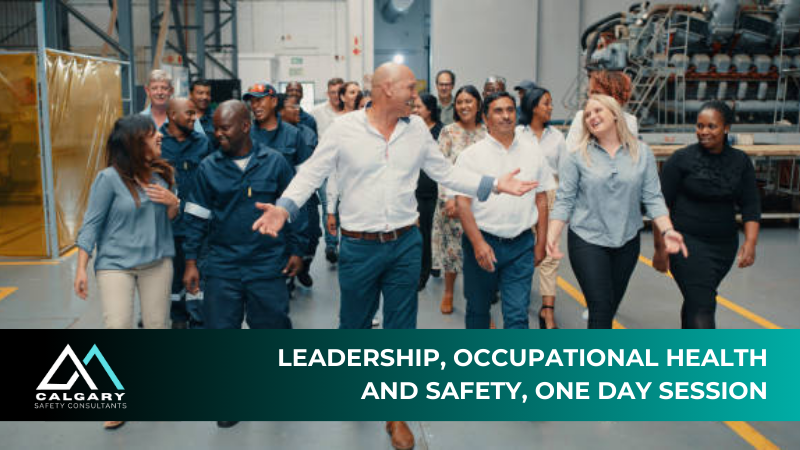
One Day Online OH&S Leadership Training
This one-day online course is designed for supervisors, team leads, and managers who need practical leadership habits that keep hazard controls working in real time, especially when schedules tighten, conditions change, and shortcuts start to look “normal.” Instead of treating safety as paperwork and reminders, the course treats leadership behaviour as an operational control, which means you learn how your planning, presence, verification, and correction decisions directly reduce exposure and prevent drift. You will practice simple, repeatable routines that help you confirm critical controls are functioning today, respond professionally to hazards and incident reports, and create defensible evidence of due diligence without turning the job into bureaucracy.
What you will learn
How the control chain works in the field, and where it predictably fails when leadership is inconsistent.
How to lead safety under real constraints using verification habits, “show me” questions, and calm corrections that protect standards and relationships.
How to make better risk decisions using hazard recognition, hierarchy of controls, and point-of-work reassessment when something changes.
How to use safety data and indicators to trigger action, not just reporting.
How to run safety conversations and meetings that produce follow-through.
How to respond to incidents and near misses, support investigations, and build corrective actions that are verified for effectiveness, including basic root cause and cause-and-effect thinking.
Materials and outcomes
Participants use a student reference manual with notes and reflection space, and they finish the day with a short, practical action plan they can apply on the next shift.
Benefits

KEY BENEFITS
Taking this Online Course provides several
direct benefits for both individuals and organizations looking to enhance
workplace safety and compliance:
1. Convenience and Flexibility
- This
course is fully online and self-paced, enabling participants to learn at
their convenience without disrupting work schedules.
- Available
24/7, it accommodates all time zones and personal commitments, making it
ideal for busy professionals or shift workers.
2. Cost-Effective Training
- The
course eliminates travel and instructor costs, providing an affordable
solution for individuals and businesses alike.
- Digital
delivery means no extra expenses for printed materials, offering all
resources in one accessible package.
3. Engaging and Interactive Content
- This
course features interactive modules, quizzes, and multimedia content to
keep learners engaged.
- Clear
examples and visual aids help participants grasp concepts quickly
and retain the knowledge effectively.
4. Immediate Certification
- Upon
completion, participants can download a valid certificate instantly.
5. Regulatory Compliance
- This
course aligns with all Canadian OH&S standards, ensuring compliance with current
workplace safety regulations across Canada.
- Completing
this training helps organizations meet legal requirements for educating
employees about hazardous materials.
6. Practical Application
- The
course includes real-world scenarios and tips that help participants
understand how to safely handle, store, and dispose of hazardous materials
in their specific workplace context.
7. Employer Benefits
- Employers
can easily track employee progress through provided reporting tools,
ensuring all workers complete the training.
- Offering
this course as part of employee onboarding can reduce workplace incidents
and improve overall safety culture.
This particular course is an excellent choice for
anyone needing quick, reliable, and effective training to understand hazardous
materials and contribute to a safer workplace.
Modules
COURSE STRUCTURE
Please, watch the above video, if you have not done so yet, for an introduction to your online course with Calgary Safety Consultants.
We appreciate your commitment to creating a safer, more respectful workplace for all. Let’s get started.
Module One – Introduction and Leadership Mindset
The video in this section is a quick explanation to your online course, which will summarize the layout of Modules, Lessons, and Quizzes. You only need to watch this video once during the course.
Module One – Introduction and Leadership Mindset
This module reframes safety leadership as operational control, which means leaders do not just support safety, they actively stabilize the standard under real-world pressure through planning, verification, and consistent correction.
Participants learn how drift forms, why pressure sets the “real standard,” and how leader reactions shape reporting, learning, and follow-through, so the site operates with reliable controls instead of assumptions.
Module Two – Legal Duties, Roles, and Responsibilities
The video in this section is a quick explanation to your online course, which will summarize the layout of Modules, Lessons, and Quizzes. You only need to watch this video once during the course.
Module Two – Legal Duties, Roles, and Responsibilities
This module explains how Canadian OH&S is built on a shared responsibility system, where employer, supervisor, and worker duties interlock like a control system to manage hazards, prevent exposure, and drive corrective action follow-through.
Participants learn how duty failures show up in real operations through assumptions, unclear ownership, weak verification, and poor loop-closure, and they practice converting legal expectations into leader actions they can apply immediately, especially when conditions change.
Module Three – Hazard Management and Risk Leadership
The video in this section is a quick explanation to your online course, which will summarize the layout of Modules, Lessons, and Quizzes. You only need to watch this video once during the course.
Module Three – Hazard Management and Risk Leadership (60 minutes)
This module gives leaders a fast, practical way to identify hazards, think about risk in real time, and choose controls that actually reduce exposure, especially when conditions change and schedule pressure pushes teams toward shortcuts. Participants learn to scan for high-consequence exposures, apply severity-likelihood-exposure thinking, select controls using the hierarchy, and verify control performance in the field, which means leaders stop relying on assumptions and start stabilizing work through observable controls and defensible decisions.
Module Four – Safety Culture
The video in this section is a quick explanation to your online course, which will summarize the layout of Modules, Lessons, and Quizzes. You only need to watch this video once during the course.
Module Four – Safety Culture
This module explains how safety culture is built through daily leader behaviours that shape what is “normal,” especially under pressure, conflict, and competing priorities. Participants learn how psychological safety, mental well-being, and consistent standards influence reporting, learning, and control discipline, and they practice leader responses that reduce preventable stressors, strengthen respectful communication, and prevent drift from becoming accepted routine.
Module Five – Data-Driven Safety
The video in this section is a quick explanation to your online course, which will summarize the layout of Modules, Lessons, and Quizzes. You only need to watch this video once during the course.
Module Five – Data-Driven Safety
Module Five teaches leaders how to use safety data as a practical decision tool, because the goal is not to “report numbers” but to prove critical controls are working, detect drift early, and intervene before harm occurs. The module builds a simple, leader-usable approach to measurement and review, starting with the difference between leading and lagging indicators, then moving into trend reading and decision thresholds, and finishing with how to run operational reviews that convert metrics into accountable field actions. By the end of the module, learners can design and interpret a small set of risk-focused KPIs, read trends using frequency, severity, exposure, and repeat findings, and run weekly reviews that drive verification, corrective action quality, and control performance rather than paperwork completion.
Module Six – Communication, Coaching, and Worker Engagement
The video in this section is a quick explanation to your online course, which will summarize the layout of Modules, Lessons, and Quizzes. You only need to watch this video once during the course.
Module Six – Communication, Coaching, and Worker Engagement
Module Six builds the practical communication skills leaders need to keep hazard controls strong in the real world, because even a well-designed safety system fails when leaders cannot intervene calmly, coach drift early, and engage workers without blame. The module is built around a simple operating principle: effective communication must restore critical control performance in the field, and it must create follow-through that is visible, verifiable, and documented in a way that supports due diligence. Across the three lessons, learners practice control-focused conversations that stabilize work immediately, learn how to run short safety meetings that produce clear commitments and verification assignments, and develop coaching and recognition habits that sustain worker engagement and reporting by consistently closing the loop.
Module Seven – Incident Leadership and Continuous Improvement
The video in this section is a quick explanation to your online course, which will summarize the layout of Modules, Lessons, and Quizzes. You only need to watch this video once during the course.
Module Seven – Incident Leadership and Continuous Improvement
Module Seven teaches leaders how to prevent incidents before they happen, respond effectively when events occur, and convert incident learning into verified improvement that reduces repeat exposure over time. The module is built around a clear chain of logic: drift begins with small control weaknesses, near misses provide early warning at low consequence, and leadership response determines whether the organization becomes better at learning or better at staying blind.
Module Eight – Action Planning and Commitment
The video in this section is a quick explanation to your online course, which will summarize the layout of Modules, Lessons, and Quizzes. You only need to watch this video once during the course.
Module Eight – Action Planning and Commitment
Module Eight trains leaders to convert safety intent into measurable risk reduction by selecting fewer, higher-impact actions and then running those actions with ownership, sequencing, and verification that stands up under real workload pressure. The module is built on a practical observation: many safety systems generate activity and “closure” while exposure remains unchanged, which means repeat findings continue because controls were never strengthened in the field and no one proved the fix held after the initial push. As a result, this module teaches leaders to choose actions using real signals, define “done” in a way that is observable and checkable, plan for barriers that predictably stall follow-through, and use verification and accountability routines that keep controls alive when conditions get busy.
Module Nine – Root Cause Analysis and Cause & Effect
The video in this section is a quick explanation to your online course, which will summarize the layout of Modules, Lessons, and Quizzes. You only need to watch this video once during the course.
Module Nine – Root Cause Analysis and Cause & Effect
Module Nine builds the investigation skill that separates “what happened” from “why it was likely to happen,” because prevention depends on identifying control failures and management system weaknesses rather than stopping at a worker-focused explanation that cannot be sustainably verified. The module teaches leaders to map cause-and-effect using cause levels, gather evidence that supports defensible conclusions, and write cause statements that are specific, non-blaming, and control-focused, which means the output of an investigation becomes a practical input to corrective actions that hold under pressure. Across the three lessons, the module drives a consistent mindset: incidents are signals of lost control, near misses are early warnings, and strong RCA finds the conditions, barriers, incentives, and verification gaps that made the outcome likely and repeatable.